2026 Reading List
Full Chronological List

1929
I respect Andrew Ross Sorkin a great deal, but coming off the relative highs of The Power Broker and Titan, I found this one a bit too dramatized. Read almost like fiction so gave it up.
AS1
This was one of the scariest books I have ever read. The author is imprecise and bludgeons you over the head the last 2/3 of the book with the Young Adult fiction-style “something bad is happening vibes”. The characters are trope-ridden and predictable, but the payoff is one of the scariest ideas I have encountered in science fiction.
So despite the flaws the payoff of the book is well worth the read. I will be carefully watching for future works from this author.
The Corporation Wars: Dissidence
I ultimately really enjoyed this one. I believe MacLeod and Iain M. Banks were best friends. Feels a bit like reading Tolkien after C. S. Lewis. There is a familiarity in the style and writing, but it is obviously distinctive.
The story and world are extremely interesting. I feel like the author is slightly less polished at unifying the different threads of a story into a coherent storyline. I felt this was good not great as a read. There are sections (such as the robots becoming conscious) where the book was elevated from a 6/10 to a 9.5/10. If the whole book had just closely followed those robots, then I think it would have been far stronger.
Project Hail Mary
Just as exquisite as the first read, but read again in preparation for the movie release this year. Enjoyed the book and the movie in equal parts and for different reasons. The movie is an extremely faithful adaptation, but cuts out a lot of the scientific content and rather makes vague references that readers will catch as nods to content not covered in the film.

A Splendid Exchange
Bernstein is a master of his craft. What sounds like a dry financial history is extremely engaging. He paints up the characters from millennia ago and invites the reader to imagine the world they inhabited and the conditions under which they made their decisions.
Top-tier non-fiction. I felt like Bernstein spent just enough time on each time-period and subject before switching topics to keep the reading engaging. Other authors don’t know when to move on and it gets boring.
Recursion
In an interview for Project Hail Mary Andy Weir recommended Blake Crouch as his favorite author and Recursion as his favorite work of Crouch’s over Dark Matter.
This is a dark book. Much closer to reading Stephen King than it is to reading Andy fucking Weir. Harrowing scenes, painted in captivating prose, stick with you for hours after concluding your reading for the day. Although there are several sections that were so beautiful and engaging that I’ll remember them for the rest of my life.
I found the first 2/3 of the book to be its strongest section. It reads a bit like the author wrote themselves into a corner and then needed to blow up the narrative to land the plane and end the book.
I found the ending extremely unsatisfying, but I’ll read some of Crouch’s other works.

The Faith of Beasts
Fantastic progression of the terrifying story they kickstarted in The Mercy of Gods, which in my humble opinion paints the most accurate depiction of the overwhelming humiliation that humans would actually face at the hands of a motivated alien civilization that is a few hundred thousand years ahead of us in technological development.
This entry into the series makes good on the promise and setup of the previous book. Several moments where my jaw hung open stupidly at the shocking developments of the story. Sharp, smart, and concise storytelling with breathtaking science fiction ideas. I continue to be very impressed with this entire series.
I cannot wait for the next entry in the series.

Seeing Like a State
If you pull a random sentence or even paragraph from this book, it’s highly likely I would find it so profoundly boring that I might fall asleep on the spot. But despite Scott’s painfully obtuse writing style and obdurate belief in standpoint epistemology, his book has something interesting and unique to say. He communicates this novel information slowly and painfully via historical accounts, but does slowly weave his way towards an interesting point.
Scott’s framing is heavily coded with apologetic “modern Western society is evil”, but his core idea is that evolutionary forces facing a state push it towards making the actions of its citizens more legible. Legible in the sense that they can be easily tabulated, tracked and of course taxed. He tells many stories where a state’s actions are obviously brutal, uncaring and seemingly counter to what seems to be best for the citizens, unless you view it through the framing of the improvements to legibility.
I think there is a more nuanced message here, but I think I need to continue to let this book digest before I’m able to unearth it.

A Hole in the Sky
This book is actually a Young Adult novel. I didn’t realize until I was maybe 1/3 of the way through and realized how shallow the characters and plot were. I ultimately enjoyed some pieces of the premise, but the book ranks the lowest perhaps of any Hamilton book I’ve read to date. 2/5 (and that is generous).
The book is about a lost society in an ark ship. The payoff for why the society is lost could have been interesting with more development, but as it stands, it is a total letdown and a deus ex machina.
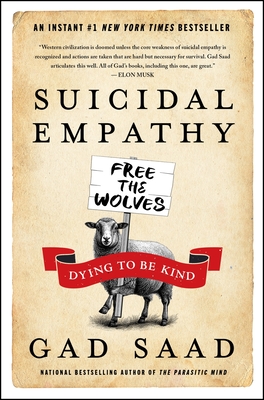
Suicidal Empathy

Halcyon Years
As compared with A Hole in the Sky, this is a much stronger story about a society struggling on in a degraded state in an ark ship. The payoff here I would say is much more interesting and the characters more developed.
I haven’t been able to truly revere a Reynolds sci-fi book in many years. House of Suns is probably the last Reynolds book that I was able to completely love. Without fail, the ideas are good, the writing is good, but then crippling narrative choices grapple the book into a nosedive that ultimately makes the read unfulfilling. I continue to chase the high that House of Suns gave me, but unfortunately Halcyon Years is simply not it.

Titan
Timelike Infinity

The Killing Star

Material World
This book sounds incredibly boring, but I was surprised by just how fascinating Conway makes the subject matter. There is an uncomfortable amount of incoherent moralization about the evilness of the men raping the earth of its resources, but this is occasionally counterbalanced by the overwhelming demand the market has for these substances. The author portrays the mining of copper in particular as a bizarre kind of catch-22. Copper mining with modern ore requires mining an insane amount of rock to recover a small amount of copper, but the copper is used for producing renewable power infrastructure, so what should we do?!
I’m not diminishing the havoc that mercury washing has caused in the natural environment or denying that mining is inherently destructive, but our modern society requires natural resources. And the earth is brimming with the elements and materials that we need, they just need to be extracted.
Ultimately this is a marvelous book if you can wade around the sensationalist claims that humans are fundamentally evil for mining, which I find laughable.
Flux
