2025 Reading List
Ranked Favorites (Top 5)
Coming soon - add your favorites here!
Full Chronological List
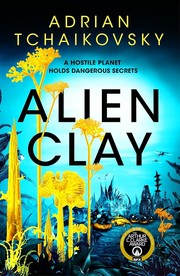
Alien Clay
I thought this one was ok, hard to get into

Wool
Read after watching Silo on Netflix. I liked the book significantly more than the show and I really liked the show. One of my favorites from this year.

The Money Trap
Pretty wild 1st-person account of SoftBank’s investments. Some great behind the scenes with Adam Neumann and what makes Masa tick. Style of the book was disjointed and probably in need of some editing.

Bad Blood
Wild story of Theranos and Elizabeth Holmes. The book is pretty well researched. It’s a terrifying account of when the “story” of the company starts outweighing the reality. Really enjoyed this one.

Machine Vendetta
Bizarre setting with a great misanthropic detective protagonist. There are a bunch of weird things that start happening that are very unsettling, but ultimately I felt the “explanation” in the end was not satisfying given the setup.

Zero to IPO

The Quants

Glucose Revolution

Eversion
Even more weird than Alastair Reynolds’s work normally is. I generally don’t like sci-fi where the setting is historical instead of futuristic and this one spent a little too much time in the past.

The Thinking Machine
Fantastic account of the history of Nvidia. Although this is not the best book on Nvidia that I read in 2025. Told some wonderful stories of the early days of Nvidia.

House of Huawei
Extremely interesting company, but ultimately this book is insanely incomplete. Felt like the author did about 1/4 of the research that they should have for this book. Spent most of the time weaving narratives that were not justified at all by the facts presented. She spent a very long time on the court case against Meng Wanzhou for extradition to the US, but failed to actually bring the reader through the main points of the trial. For example, “The Coup at Caesar’s Palace” has a much more boring court case that it steps through in fantastic detail and actually brings the reader along through the main sticking point of the trial. Very disappointing book.

Empire of Silence
This was a bit out of left field for me. I loved the protagonist and the world building. I loved the presentation of the complexities of galactic politics and the rich son who did not want to follow in his father’s footsteps. I loved his escape and fall into poverty. This is my first read from this author, but I’m looking forward to reading more.

1177 B.C. (Revised and Updated)
I got into a bit of an ancient anthropology kick this year. This was one of my favorite reads. I think with much of ancient anthropology, the academics are cornered into needing to invent quite a bit of the narrative they paint about these societies. Because the fragments of data they do have are incredibly sparse. Ultimately I walked away feeling a deep appreciation for the complexity of these ancient peoples. How small the world really felt to each of them, and how many other societies also existed, but just didn’t happen to engrave their writings into clay tablets that would survive for thousands of years.

The Mountain in the Sea
Tried this one, but story was disjointed and weird, so stopped very quickly.

Anathem
I have tried to read this book several times over the year, but I always tap out after about 100 pages. This one has never managed to pull me in.

The Mercy of Gods
This is the absolute standout as the best science fiction book of 2025. Corey is an expert at his craft and manages to write a completely fresh and in my estimation quite accurate depiction of an alien invasion of Earth. The humans barely stand a chance. Every turn you think, certainly now they’ll turn a corner and be able to put up a fight, but no. The technological advantage of the invaders is insurmountable.
Another important aspect that this book manages to nail is providing a believable motivation for an alien invasion. Most just leave it unsaid and unexplainable. The horror of being completely dominated by aliens then being the main feature of the book. But I felt like Corey provided wonderful world-building and presented a really well-motivated culture with excellent reasons for wanting to parade around the galaxy smashing and grabbing more primitive species.
More Money Than God
Another really great read. This one picks out hedge fund managers through the decades since the 1960s. For each of the managers that feature as the focus of each chapter, Mallaby provides a detailed account of the character and the strategic innovation that defined their success. He also does a great job of weaving a narrative between the chapters. Painting a picture of the shifting sands of the financial markets and how the best hedge fund managers were forced to find a new seam in the market to exploit. Fantastic read.

The Box
If you don’t hate unions, then I entreat you to read this book. I had to keep putting it down for a few days before picking it up again, because the horrible value-destructive nature of unions at ports is such a sad tax on our societies. Those horrible organizations tried their best to prevent humanity from evolving and driving shipping costs down over time. They negotiated astonishingly complex make-work schemes in order to maximize the need for their members’ services. Receive a pallet, unpack it, repack it, load that pallet onto a ship, unpack and repack on the ship. Eventually the good guys won, but unfortunately the inventor of the container didn’t seem to benefit financially as much as maybe he should have.

Seeing Like a State
This is one of the densest books I’ve read in quite some time. I think the author really does have something remarkable to say throughout this book. I really enjoyed how fresh and interesting the examples that Scott presents are. He does have a fundamentally pessimistic perspective, but nonetheless he did expand my mind. He provides an excellent explanation for the internal motivations of bureaucracies. They must make the economic activity of their citizens legible, so that they can levy taxes. This has forced some unfortunate dislocations of previously acceptable ways of life, but modernization is not a great evil as Scott would have you believe. Weird, but I really did like it.
Despite not enjoying the experience of reading the book, as time marches forward I find myself referencing and considering the point of view of the author quite a bit. So I think for that reason it’s worth reading. I love the idea that there are evolutionary forces acting on societies. Shaping behavior outside of culture and intention, but rather glacial, potent innate forces guiding the progress and shape of government. I find that quite a powerful idea.

Apple in China
Outrageously good book and excellent topic selection by the author. I really enjoyed the framing. It’s not just a book about Apple, as we’ve all read biographies and accounts of the developments of Apple over time, but focused through the lens of what has Apple been up to in China? Why have they invested hundreds of billions of dollars into China? Who were the characters and people that made that possible? I love the stories about Terry Gou and the bizarre informal supply-chain formed by the scalpers at the Apple stores in China.

The New Map
I think before 2025, most people did not think about energy. You turn on the light switch and the light comes on. But it’s really much more interesting than that. I find Yergin a little too jingoistic for my taste, but I think he wrote a remarkable recent history of the major world powers and their energy situation. Remarkable to me how the Middle Eastern states have been positioned as important players in the modern world only because they happened to have oil in their patch of Earth. Additionally, I did not appreciate how important fracking has been for the security of the United States until I read this book.
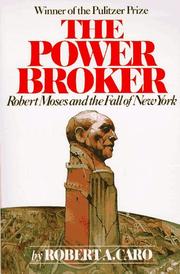
The Power Broker
The Power Broker is a book I originally bought in 2023 and spent a lot of time on and off pushing my way through. The book is so thoroughly researched that it can feel tedious at times. And truly, I found myself skipping entire chapters wholesale after I found the premise suitably monotonous. But Caro does sketch a fascinating arc of a man’s life.
Robert Moses started his career as a true full-throated reformer who wanted to follow the rules and elevate public service. He felt it was truly the highest calling of mankind and wanted to promote that behavior in career public servants. However, the rat’s nest he stumbled into was enough to completely break him and force him onto a darker path.
By the time he ended his career, he was the single most important man in New York public life. So many governors and mayors tried to ice him out over the years, but he was an unfireable man. To the point that his most oft-used trick was to flip the script and threaten to quit any time the opposing party seemed to be confused about how critical Robert Moses was personally to progress. The mayors would whinge and complain, but they inevitably would give him his way because otherwise nothing would get done. Truly a fantastic book.

Flybot
Eh. Not really worth your time. Silly premise, bad characters, and very poorly motivated drama.

The Light Brigade
I tried this book, but I stopped because it ended up feeling more like an opinion piece in The Atlantic than a science fiction novel.

The Object
This is a nice first-contact style story, told through the eyes of a protagonist scientist that makes the initial discovery of a craft flying through the solar system. I feel like generally science-fiction books make the mistake of assuming that we’ll have incontrovertible evidence of an alien craft. In this novel Calvert nicely plays with the incredible uncertainty and reluctance of the scientific community to actually admit that the measurements indicate that the object is actually a spacecraft. Ultimately I think this book falls flat in the final act as they go to investigate the object with a ship. Too many unrealistic leaps, but overall quite enjoyable.

China's World View
I wanted to follow up my reading of Apple in China and The New Map with a book written about China, but with a pro-China voice. It’s honestly quite interesting.

Manias, Panics, and Crashes (Seventh Edition)
Given the incredible heat in the stock market around AI investments, I thought it would be prudent just to get a historical perspective on some of the greatest historical moments in finance. What are the dynamics of how a mania forms? What are the systemic factors that contribute to an eventual panic and crash? I really enjoyed this book.
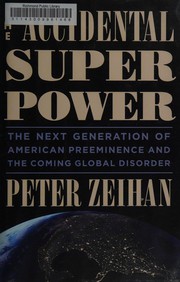
The Accidental Superpower
Zeihan comes across as rather narrow-mindedly jingoistic in his perspective of the overwhelming superiority of the United States, but I appreciated the diversity of opinions especially when considered alongside “China’s World View” that I had read a few months earlier. I in particular read a 10-year anniversary edition of the book, where he came back to review the predictions he had made in the original edition and see how they had held up. I generally found his assessments and predictions to be rather accurate.
Overall, I enjoyed reading the book even if I don’t agree completely with Zeihan’s perspective. Nonetheless, I did find myself convinced by some of his arguments, especially around the strategic importance of America’s waterways and overwhelming bounty of natural resources.

The Coming Wave
Really despicably short-sighted perversion of current events in AI. I was personally offended by the grandiose and nonsensical positions the author takes in this book. If I had a physical copy of this book I would have chucked it across the room several times in the opening chapter. I find this breed of paternalism quite disgusting. If the same principles had been applied to the internet, the past 3 decades of progress would have looked very different. The protocol itself would have been in a walled garden.
The core of Suleyman’s arguments seems to revolve around the belief that AI technology can usher in a new era of human progress, but only in the hands of the trusted elite. It’s too dangerous for the unwashed masses to ever have access to it. I trust few things less than the wisdom of an academic in doling out access to a beautiful future. I can’t think of a clearer path to a totalitarian nightmare than through the policies Suleyman advocates for in this book.

Livesuit
Marvelous novella set in the world of The Captive’s War. It also ends up being a fantastic precursor to the events of the second book in the series. I’m looking forward to reading the next book in the series.